
After several years of extraordinary growth, Miami’s real estate market is entering a more nuanced phase.
The market is neither experiencing the frenzy of 2021 and 2022 nor showing the broad weakness that some buyers have been waiting for. Instead, we are seeing something healthier: a market increasingly driven by location, property quality, condition, and—perhaps most importantly—pricing.
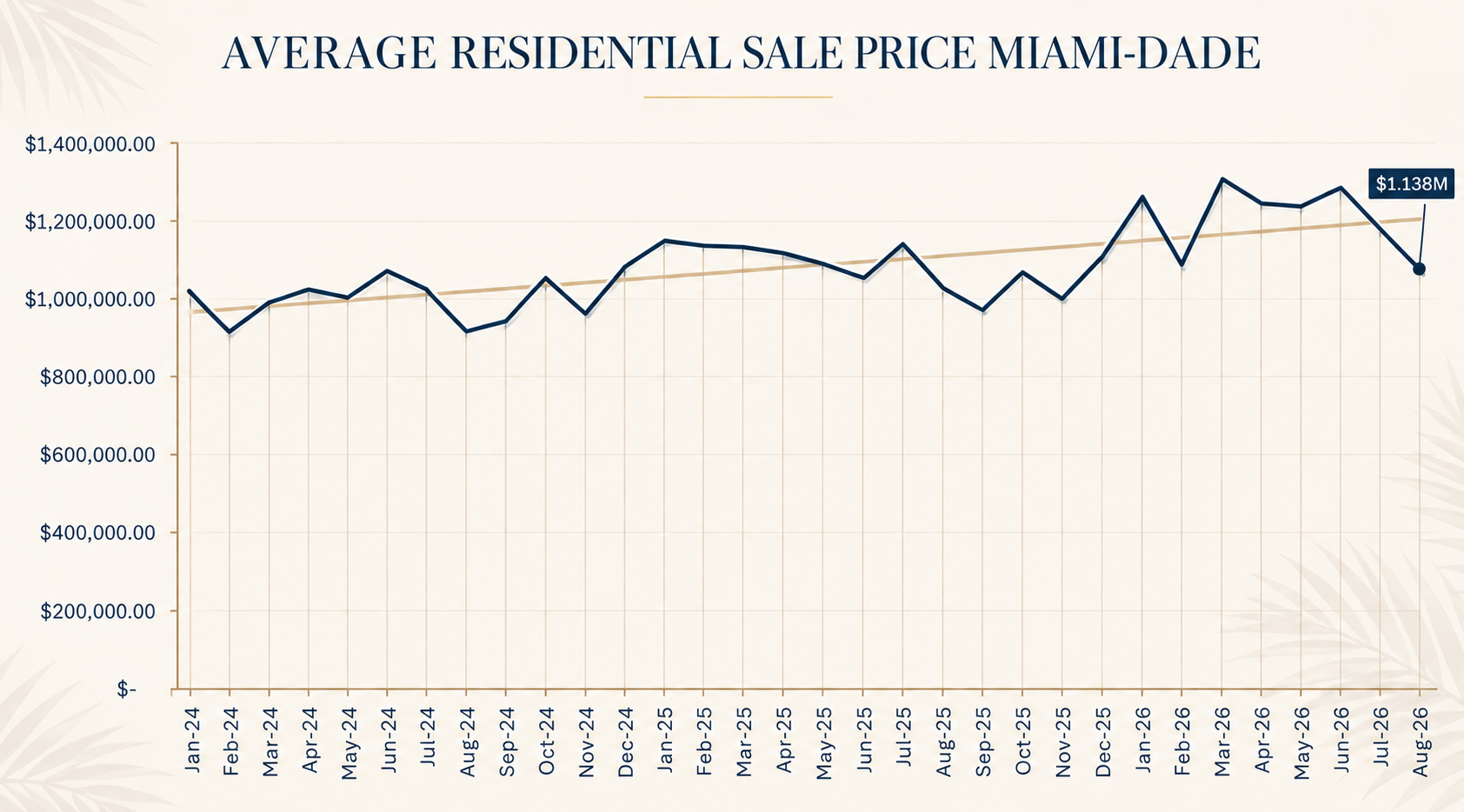
Across Miami-Dade County, the median sale price for single-family homes reached $680,000 in August 2026, approximately 3.8% higher than a year earlier. At the same time, the supply of single-family homes declined roughly 19% year-over-year, leaving the county with approximately 4.9 months of inventory.
That remains below what is generally considered a balanced market.
But those countywide numbers only tell part of the story.
In Miami's luxury neighborhoods, the market varies considerably from one community—and sometimes one block—to another. Miami Beach, Coconut Grove, Pinecrest and Coral Gables each have their own dynamics.
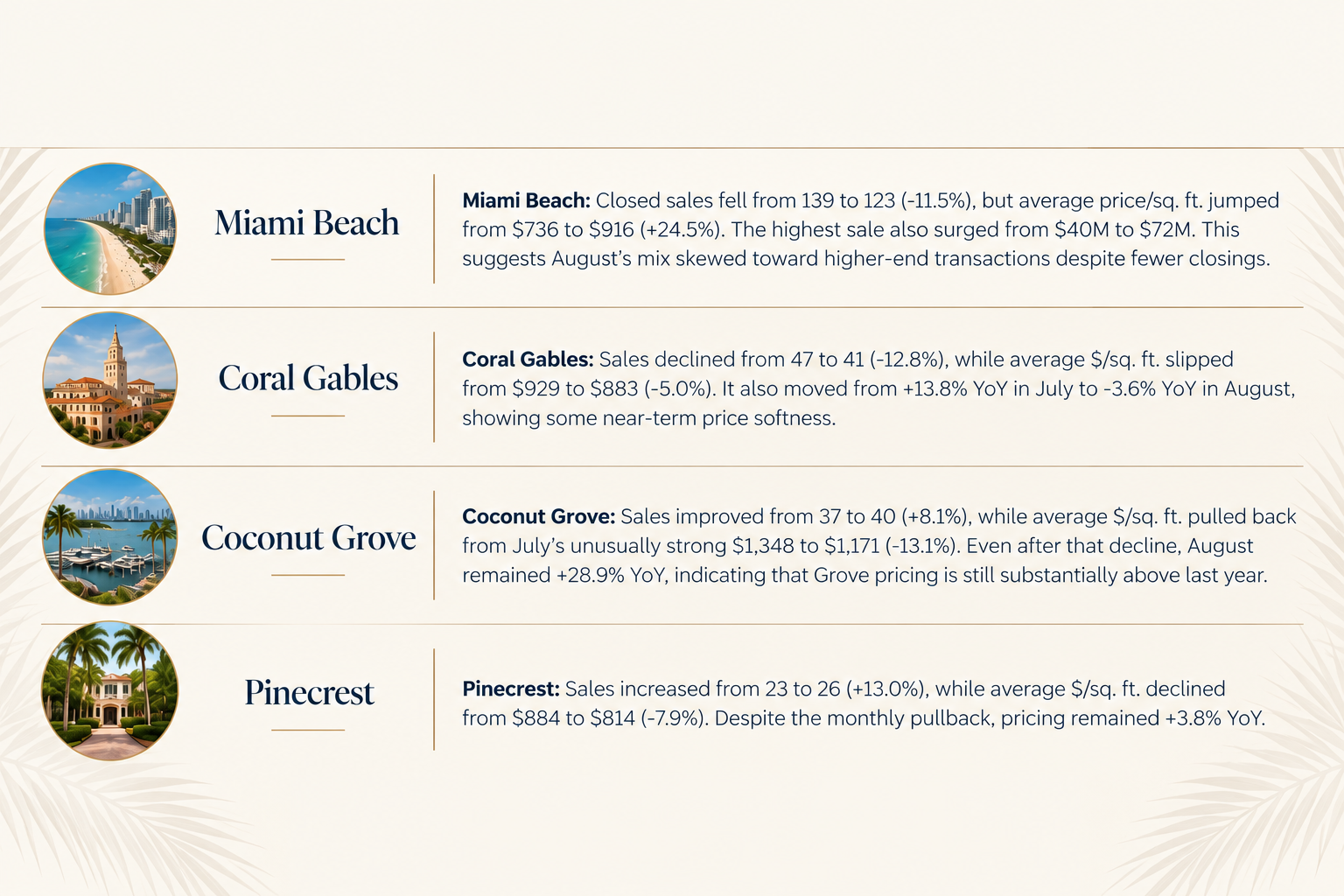
Few areas illustrate the complexity of Miami real estate better than Miami Beach. The single-family market remains heavily influenced by scarcity. Waterfront homes, newly constructed properties and residences in the most desirable neighborhoods occupy a completely different market from older or non-waterfront homes. At the same time, Miami Beach's condominium market provides buyers with considerably more choice. As of late September, approximately 1,631 condos and townhomes were listed for sale in Miami Beach, representing roughly 16 months of inventory. By comparison, single-family inventory stood at approximately 155 homes. This distinction is important. A buyer looking for a condominium may encounter significantly more negotiating leverage than someone pursuing a highly desirable single-family residence. The luxury end of Miami Beach remains particularly significant. During the first quarter of 2026, approximately 96% of Miami Beach single-family transactions were above $1 million, illustrating just how concentrated the housing market has become at the luxury level. For sellers, however, the lesson remains straightforward: being in Miami Beach does not automatically guarantee a quick sale. Buyers have become more discerning, and properties that enter the market substantially above comparable sales can sit even in highly desirable locations.
Coconut Grove continues to be one of Miami's most sought-after residential communities. The combination of its location, established neighborhoods, walkability, schools, waterfront access and limited supply of single-family homes continues to attract buyers. The numbers reflect that demand. In August 2026, the median sale price for a single-family home in Coconut Grove was approximately $2.525 million, compared with approximately $1.963 million in August 2025. More importantly, sales activity increased. There were 18 single-family closings during August compared with 10 during the same month last year. Through the first eight months of 2026, 133 single-family homes sold in Coconut Grove compared with 97 during the same period of 2025. Inventory also remains relatively constrained at approximately 3.7 months of supply for single-family homes. Monthly median prices in neighborhoods like Coconut Grove should always be interpreted carefully because relatively small numbers of transactions—and differences in the types of homes sold—can create large percentage swings. Nevertheless, the broader combination of rising transaction volume and limited inventory points to continued demand for Grove single-family homes. The condominium market tells a somewhat different story, with approximately 9.5 months of inventory, giving buyers more options.
Pinecrest continues to attract buyers seeking larger lots, newer construction and more space while remaining close to Miami's urban core. Twenty-two single-family homes closed in Pinecrest during August 2026 compared with 16 during August 2025. The median single-family sale price for the month was approximately $2.93 million, while the year-to-date median through August stood at approximately $2.7 million. Perhaps more interesting is the increase in transaction volume. Through August, 135 single-family homes sold in Pinecrest during 2026 compared with 110 during the same period last year. Current inventory represents approximately 4.8 months of supply, which is still relatively tight. However, Pinecrest is particularly sensitive to property condition. Renovated homes and newer construction can command significant premiums, while older homes requiring substantial modernization compete not only against other homes but also against the value buyers assign to the underlying land. For sellers, accurately positioning a property within those categories is becoming increasingly important.
Coral Gables remains one of South Florida's most established luxury residential markets, but current conditions demonstrate why looking beyond a single monthly headline is essential. The median single-family sale price was approximately $2.275 million in August, compared with $2.85 million during August 2025. That decline, however, does not necessarily mean the value of a typical Coral Gables home fell by the same percentage. Only 24 single-family homes closed during the month, and changes in the mix of properties sold can significantly move a monthly median. Looking at a broader period provides additional perspective. Through August 2026, 260 single-family homes sold in Coral Gables at a median price of approximately $2.306 million, compared with 242 sales and a median of approximately $2.363 million during the same period last year. In other words, transaction volume increased while the year-to-date median remained relatively close to last year's level. There are currently approximately 5.7 months of single-family inventory, putting Coral Gables much closer to a balanced market than Coconut Grove. That increased competition among sellers is showing up in pricing behavior as well. By late September, roughly 46% of active single-family listings had experienced an asking-price reduction. For sellers, that is an important signal: today's buyer is willing to purchase, but increasingly unwilling to chase an unrealistic asking price.
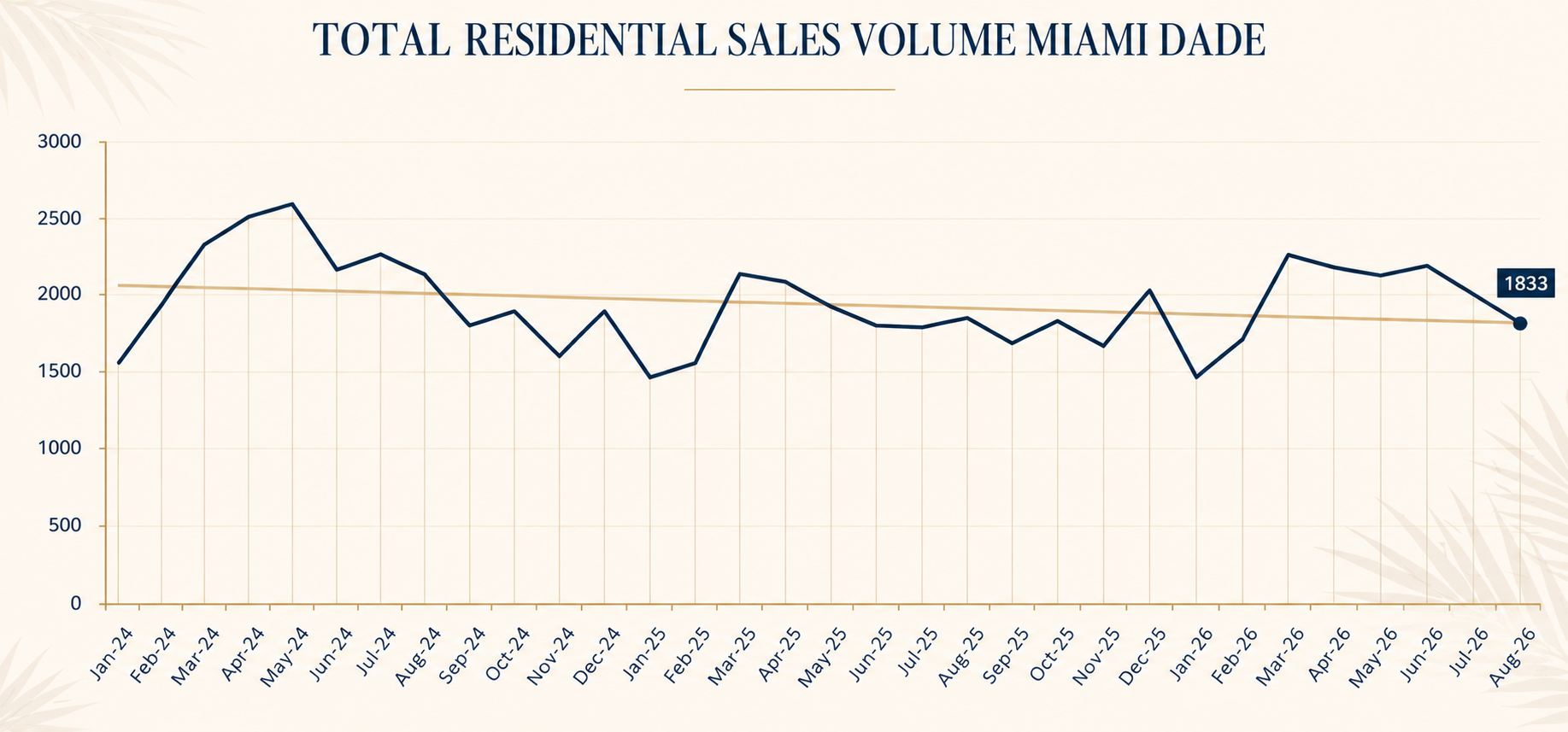
For buyers who spent the last several years waiting for Miami prices to collapse, the market has not produced the widespread correction many anticipated. Instead, opportunity has become highly property-specific. Higher inventory in certain segments, longer marketing times and more frequent price reductions can create negotiating opportunities—particularly for homes that have been on the market for an extended period. But desirable, properly priced homes can still attract strong interest. The result is a market in which understanding recent comparable sales, seller motivation and micro-market inventory matters considerably more than broad headlines about Miami real estate.
The days when nearly any property could be placed on the market at an aggressive price and quickly receive multiple offers are largely behind us. That does not mean it is a poor time to sell. Miami-Dade's single-family inventory remains relatively constrained, luxury transactions remain an important part of the market, and demand continues for high-quality properties in established neighborhoods. But buyers are more disciplined. Homes that are renovated, well presented and appropriately priced are separating themselves from competing inventory. Properties that require significant work—or enter the market substantially above comparable sales—can remain available considerably longer. In this environment, the first few weeks on the market matter. Pricing should be based not simply on what other sellers are asking, but on what buyers have actually been willing to pay.
Miami real estate in 2026 is not one market. Miami Beach is experiencing very different conditions between its single-family and condominium sectors. Coconut Grove continues to demonstrate strong demand and limited single-family supply. Pinecrest is seeing increased transaction activity while buyers remain highly conscious of condition and value. Coral Gables remains active, but increased inventory and price reductions are creating a more balanced negotiating environment. Across all four communities, one trend is becoming increasingly clear: The market is rewarding quality and realistic pricing. For buyers, that means opportunities exist—but they are often found property by property rather than through a broad market decline.
For sellers, it means that understanding exactly where a property fits within its neighborhood has become more important than ever.
At The DiCarlo Group, we have spent more than 30 years navigating Miami's real estate market through changing interest rates, economic cycles and shifts in buyer demand. Whether you're considering selling, purchasing or simply want to understand what your property may be worth in today's market, we're happy to provide a neighborhood-specific analysis based on the most recent comparable sales and current competition.
